
Preparing for an Ocean (Atlantic) Crossing
For many sailors, crossing the Atlantic sits near the top of the dream list—an almost mythical undertaking that symbolizes seamanship, adventure, and the ultimate expression of self-reliance.

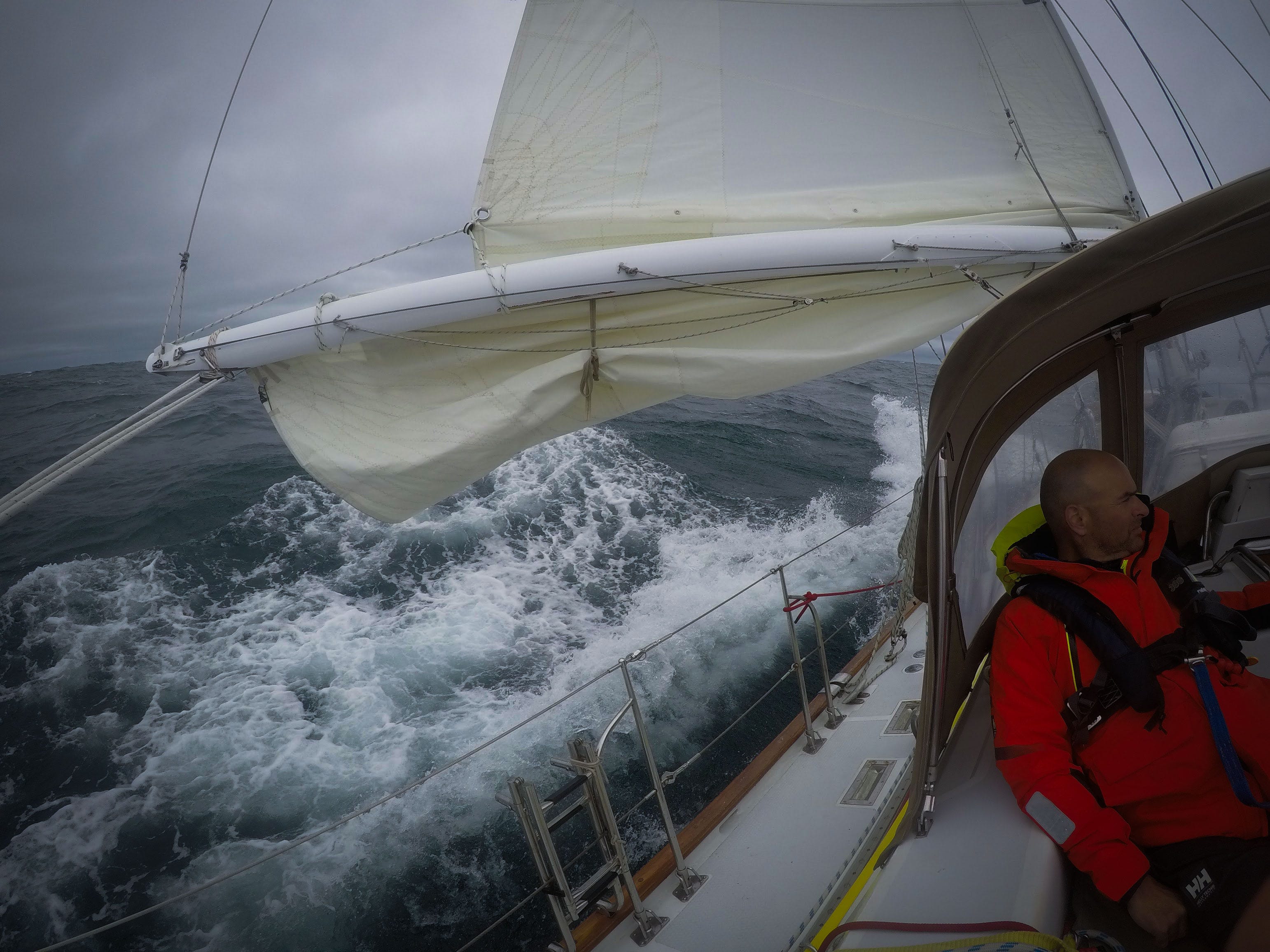
Crossing the Atlantic demands preparation, seamanship, and a clear understanding of how a boat—and its crew—perform far offshore. While every crossing is different, sailors tend to converge on a consistent set of “Need-To-Knows”.
We sat down with two “crossers” (there’s no nickname for sailors who have crossed the Atlantic like there is for those who have crossed the Equator - but school me if you know otherwise) to chat on our podcast, The Morning Muster. The insights from our conversation reflect thousands of miles of offshore , and offer guidance for others to help prepare for a safe, well planned passage.
The following points are based on our conversation with Jillian Greenwalt and Chris Lobel, and are not all inclusive lists, but hopefully offer some new ideas about gear and preparations to consider for offshore sailing.
1. Rigging and Structural Integrity Must Be Verified, Not Assumed
Don’t trust, verify! Even recently upgraded rigging requires inspection before heading offshore. Offshore conditions magnify small weaknesses, so preparation begins with a proper rig check. A surprising number of failures occur in the first 24–48 hours of a passage, when stress and motion reveal what marina conditions hide. Preventing those failures begins with slow, methodical inspection.
Go aloft and examine every connection with hands and eyes
Inspect all connection points: chainplates, tangs, cotter pins, turnbuckles, and even backing plates! They reveal alot about the condition of the fastener and the integrity of the bedding compound.
2. Emergency Systems And Spares Are Not Optional Extras
Offshore, help isn’t coming quickly, and parts aren’t deliverable. Redundancy is your safety net.
Essential emergency and redundant systems include:
Multiple high-capacity bilge pumps independent of the main system
Backup steering options (2 autopilots, tillers, windvane)
Redundant sails (backups) and storm sails
The value of this equipment increases exponentially with distance from land. Just as important as owning it is knowing how to deploy it—before ever leaving the dock.
3. Engine Preparedness Is Important
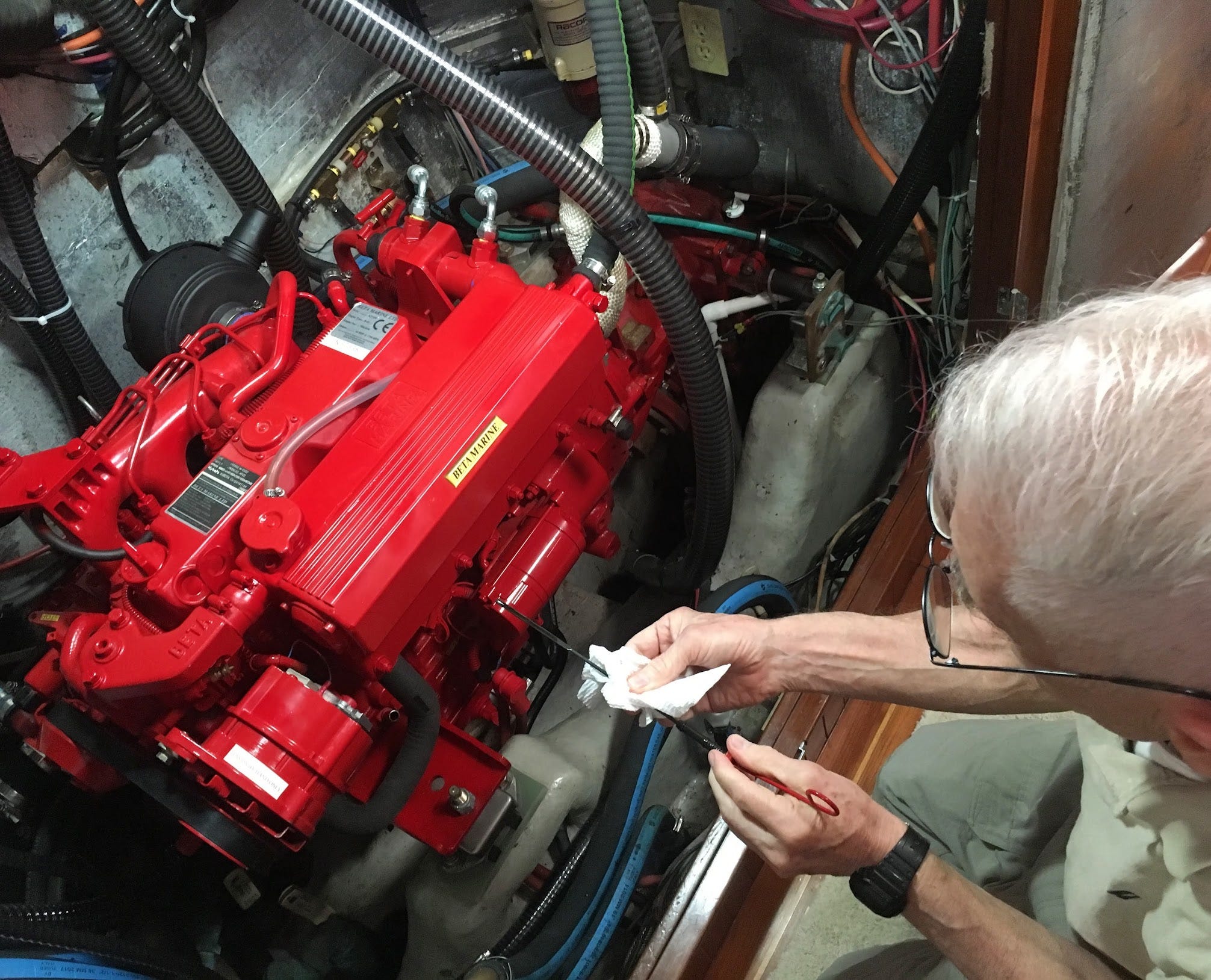
Many sailors underestimate how often the engine becomes essential in mid-ocean, whether for maneuvering, charging, or motoring through flat calms.
Key lessons include:
Carry multiple sets of fuel and oil filters
Expect to change filters underway (you might not know if you got bad fuel until it’s too late)
Have spare alternators, belts, impellers, and a backup fresh water pump
Maintain the option to feed the engine directly from a jerrycan
Learn basic diagnostics for common failures
Test everything under load before departure
Engine repairs in seven-foot seas are difficult—but far better than being caught without propulsion when it matters.
4. Heavy Weather Tools Should Be Practiced, Not Just Carried
Storm tactics aren’t theoretical offshore—they’re practical skills.
Sailors consistently report that they wish they had practiced certain maneuvers before needing them, including:
Deploying a Jordan Series drogue
Using a storm jib or trysail
Heaving-to effectively
Reefing early, efficiently and quickly
One of the most valuable techniques is simply heaving-to. When done well, it can turn a chaotic sea into a manageable one, allowing the crew to rest, think, and regain control. It’s hard to truly practice, unless you intentionally head out in a gale and 10’ seas to practice.
5. Crew Preparation Is as Important as Boat Preparation
A well-prepared boat can still be unsafe if the crew lacks confidence or coordination. Muscle memory is the key to success. Are you drilling these every week? If not, you are probably unprepared.
Core training that pays off repeatedly includes:
Offshore first aid
Engine basics (fuel bleeding, coolant leaks, impeller changes, belt changes/adjustments, electrical charging/starting issues)
Weather interpretation and routing
Man-overboard drills in sloppy conditions
Radio communication channels and protocols
Night navigation and radar interpretation
Running through realistic scenarios—engine failure, steering failure, unexpected squalls—builds the muscle memory needed when conditions deteriorate.
6. Watch Systems Protect the Greatest Offshore Asset: Sleep
Good sleep is a safety system. Offshore fatigue leads to poor decisions, sloppy navigation, and weakened morale.
Common watch systems vary by crew size, but the principle remains consistent:
short watches, consistent rotation, and protected rest periods.
Rotations might be:
3 hours on / 3 hours off (two watches)
3 hours on / 6 hours off (three watches)
4 hour watches by night / 6 hour watches by day
The best system is one that the crew can maintain for days or weeks without exhaustion. The ocean rewards well-rested sailors! Our friend Adam Cove wrote an interesting article on the subject of sleep for SAIL Magazine.
7. Small Breakdowns Become Major Risks Offshore
A recurring lesson is simple: anything that’s “probably fine” in coastal cruising must be fully resolved offshore.
It’s not enough to hope a leak won’t get worse or a wire won’t chafe through. The ocean amplifies every weakness—mechanical, structural, and mental.
Fixing problems in port isn’t over-preparation; it’s mandatory insurance.
Conclusion
A safe ocean crossing is preparation—detailed, unglamorous, repetitive preparation. The more thoroughly the boat and crew are readied, the more the crossing becomes what it should be: a long, steady rhythm of watches, wind, and water.
In the end, the biggest lesson from this discussion is that success offshore is not about luck or heroics. It’s about disciplined preparation, practiced skills, and respect for something much larger than your boat, ego and abilities.
It is also important to remember you can change the watch schedule if needed. On one south bound trip, Hatteras to Florida, we started with 4 and four. As it got chilly we went to 3 and three. The last night before the cold snap broke we did 2 and 2 because the watch was wearing all their layers, wrapping in blankets, hot water bottles... and 2 hours was all we could take. Next morning it warmed up and we did 6 and six in shorts and tees..
You should note that if you have to feed diesel directly from a jerry can you also need to feed the return into that jerry can or you'll run out of fuel very quickly. Ask me how I know!